








1Dahod · Narmada · Dang · Tapi · Chhota Udepur · Mahisagar, Gujarat
8 in 10 women here work. But there’s a catch
Tushar Tere, Vishal Patadiya & Yagnesh Mehta
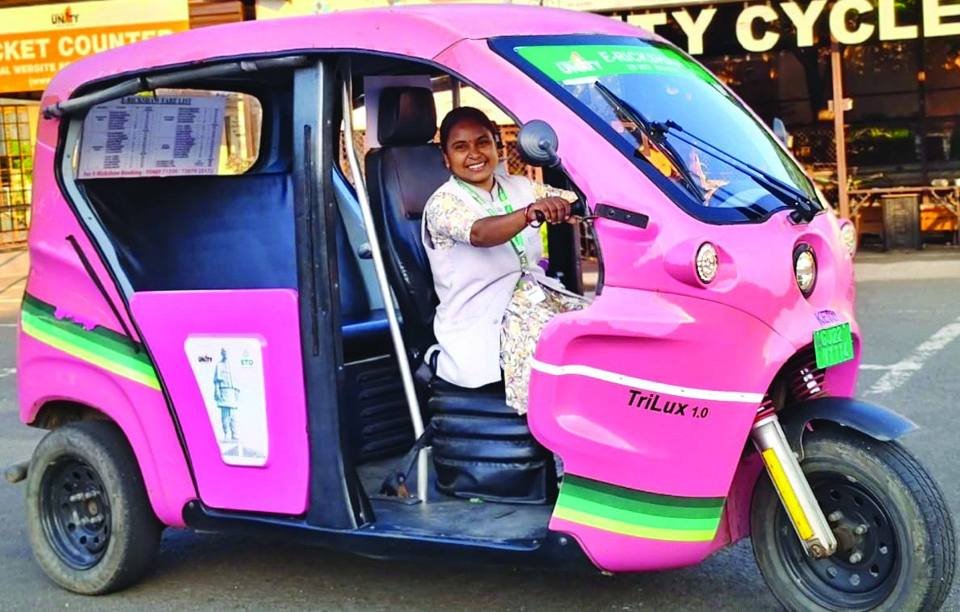
Wearing her pink uniform, Anita Tadvi takes her e-rickshaw to the Statue of Unity in Ektanagar every morning. As tourists begin arriving at the world’s tallest statue in Narmada district, the 25-year-old’s day gathers pace. She drives them around the premises as driver and guide, one of many in this tribal Gujarat belt east of Narmada who are reaping the benefits of tourist inflows since Sardar Patel’s iconic statue was inaugurated in 2018.

In India’s first district-level periodic labour force survey (PLFS) released in Sept, the Dahod-Narmada-Dang-Tapi-Chhota Udepur-Mahisagar belt recorded the country’s highest female labour force participation rate of 82.1%. The rural rate was even higher, at 86.5%, suggesting village economies are driving the standout number.
Across these districts, women are working because households need two earners, men migrate for work, farms and livestock require family labour, and govt schemes, NGOs and self-help groups have opened up small livelihood routes.
“Statue of Unity has brought many opportunities for women in our district. When I learnt about the requirement for e-rickshaw drivers three years ago, I discussed it with my husband and in-laws. They immediately agreed,” Tadvi said.
She took driving lessons, obtained a licence and joined a group of around 90 women who drive e-rickshaws at the monument.
Self-help groups that teach making everyday products such as soaps, bamboo items, bags and festive decorations have brought more informal jobs. Tourism has poured into this basket.
“Women in the tribal belt are productive and earn more than men. They not only work outside the house but also shoulder responsibilities at home, leaving them with hardly any free time,” said Vadodara-based entrepreneur Swati Bedekar.
Dinesh Patel, a farmer from Mahisagar district, said many women work as farm hands and can be hired from the labour market. “I need farm labourers regularly in my corn fields. I prefer to hire women as they are productive and dedicated. In our district, women easily find farm jobs,” Patel said.
But high participation does not automatically mean secure work.
Madhu Gayakwad, who is from Dang and heads the sociology department at VNS, said employment opportunities for women had increased but remained uneven and there is scope to do more to improve livelihoods. As PLFS shows, tribal Gujarat’s women are working. The next benchmark is to make this income sustainable enough to change their lives.
Close behind the men. Here, 89.8% of men and 82.1% of women are in the job market, a gap of 7.7 points. Only seven districts in India have a gap under 10 points.
2Yamunanagar, Haryana
Factories at every turn. Yet 9 in 10 women stay out
Jaskaran Singh
Alka Mehta lives in a district crowded with factories, but none of them holds much appeal for her. Yamunanagar’s plywood units, paper mills, sugar mills and manufacturing plants generate jobs across the district. But Mehta, a homemaker, sees much of that work as too physically demanding for women like her.
“Women cannot work there because the factories require hard and skilled work,” she said.
That disconnect between the jobs Yamunanagar offers and the work many local women are prepared to take up may help explain one of the starkest findings of the PLFS. Only 10% of women aged 15 and above in the district are working or looking for work — the lowest female labour force participation rate (LFPR) outside Delhi.
The problem isn’t a straightforward absence of work.
My husband earns well, so I do not need to work. I work at home and spend my time taking care of my children
Geeta Arora, homemaker, Yamunanagar
That divide is visible in the district’s brick kilns. Women account for around half the workforce there, said Attar Singh, an advocate who works on labour-related issues. But most of them are migrants from Bihar, Uttar Pradesh, West Bengal and Assam.
The women who do enter paid work are usually concentrated elsewhere — in schools and colleges, govt departments, shops, businesses and other service-sector jobs.
Education is not the obvious missing link. Women made up about two-thirds of students in Yamunanagar’s general arts and science colleges in 2023-24.
And educated women instead looked towards govt jobs, education and private-sector employment, including IT, software and businesses, said Suman Bahmani, mayor of Yamunanagar-Jagadhri Municipal Corporation.
That preference narrows the field considerably in a district whose industrial economy is built heavily around manual and factory work.
Sangeeta Singhal, a local, said women were far more likely to work in “businesses, shops, schools, colleges and other service-sector activities” than take up labour-intensive jobs because of their physically demanding nature.
For many families, there is another reason women stay out of the labour market — they can afford to. Geeta Arora, a homemaker, explained her choice. “My husband earns well, so I do not need to work. I work at home and spend my time taking care of my children,” she said.
The jobs are there. But for many of Yamunanagar’s women, they are not jobs they see themselves doing.
Delhi does worse. Six of India’s 10 lowest districts on this measure are in Delhi, and none of Delhi’s districts reaches 19%. In rural Yamunanagar, the figure is 7.2%.