








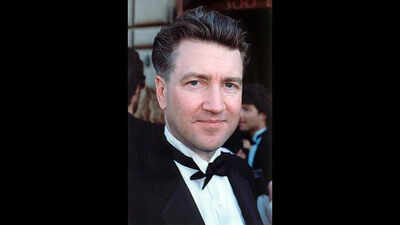
David Lynch’s Hollywood Hills compound, where the filmmaker lived and worked for decades, sold for $13 million on March 2, 2026, after being listed for $15 million the previous September. The estate grew from a pink, midcentury modern house designed by Lloyd Wright, son of architect Frank Lloyd Wright, into a multi-property compound with 5 adjoining parcels and several residences and ancillary structures. Lynch gradually expanded the property, acquiring neighbouring homes that became part of his creative world. One housed his production company, Asymmetrical Productions, while another appeared in his 1997 film Lost Highway. He also commissioned architect Eric Lloyd Wright, Lloyd Wright’s son and Frank Lloyd Wright’s grandson, to design a swimming pool and pool house. The sale marked the end of a decades-long chapter in the history of a property closely associated with Lynch’s filmmaking.
How David Lynch turned a Lloyd Wright house into a Hollywood Hills compound
The centrepiece of the estate is the Beverly Johnson House at 7017 Senalda Road in Los Angeles. Designed by Lloyd Wright in 1963 and completed in 1967, the pink residence is recognised by Historic Places LA as an example of midcentury modern and organic residential architecture. Its geometric exterior, large windows and skylights reflect the architect’s approach to modern residential design. Lloyd Wright was the son of Frank Lloyd Wright, whose work helped shape modern architecture in the United States. According to Artnet News, Lynch bought the 3-bedroom house for $560,000 in 1987. The purchase began a gradual expansion that eventually brought neighbouring properties and additional land into the estate. Lynch’s original home remained the architectural focal point of the larger compound.In 1989, Lynch acquired an adjacent Brutalist-style residence at 7029 Senalda Road for about $542,000, according to Artnet. The building became the base for Asymmetrical Productions, the company through which he developed and produced projects. In 1995, he added another neighbouring property at 7035 Senalda Road, reported to have cost about $346,000. That residence later appeared as the Madison home in Lost Highway (1997), the psychological thriller starring Patricia Arquette and Bill Pullman. The property also contained Lynch’s editing suite and screening room. The compound’s architectural history extends across generations of the Wright family. In 1991, Lynch commissioned Eric Lloyd Wright to design a swimming pool and pool house. Eric was Lloyd Wright’s son and Frank Lloyd Wright’s grandson. Lynch also added other structures, including a two-storey guest house and a separate one-bedroom living space finished in smooth grey plaster. The resulting property combined the original midcentury house with more industrial-looking buildings and spaces used for creative work.
What the $13 million sale included
The property was marketed as a 5-parcel compound spanning 2.31 acres, according to its Redfin listing. The listing describes approximately 11,000 square feet of living space, 10 bedrooms and 11 bathrooms across the residences and associated structures. Other media reports have rounded the estate’s size to approximately 2.5 acres, so the 2.31-acre figure reflects the listing’s more precise measurement. The compound was offered for $15 million in September 2025, several months after Lynch died in January 2025 at the age of 78. It ultimately sold for $13 million, a difference of $2 million from the asking price. The sale was recorded on March 2, 2026, according to property records and reporting by Homes.com.The $560,000 price paid in 1987 applied to the original Beverly Johnson House, not the fully assembled compound. Lynch’s later acquisitions, renovations and additions transformed the property over several decades, making the final sale a transaction involving multiple parcels and buildings rather than a single standalone residence. The property was listed by Marc Silver of The Agency Beverly Hills. Speaking to Homes.com News after the sale, Silver said preserving the estate’s architectural integrity and legacy had been a priority during the process. Its combination of architectural provenance and film history distinguished it from a conventional luxury-home listing.
A creative home shaped by the Wright family and Lynch’s films
Lynch’s compound reflected the close relationship he maintained between his surroundings and his creative life. The estate offered him both a private residence and dedicated spaces for production, editing and screening. The buildings were not simply neighbouring homes: they became part of the infrastructure through which he worked, while one also became recognisable to audiences through Lost Highway. The Wright family connection was another defining feature. Lloyd Wright designed the original Beverly Johnson House, while Eric Lloyd Wright later contributed the pool and pool house. The property therefore brought together the work of three generations of architects and the personal history of a filmmaker whose work often blurred the boundaries between familiar spaces and unsettling cinematic worlds.Lynch’s death in January 2025 brought renewed attention to the Hollywood Hills estate, which had been assembled and altered over nearly four decades. Its March 2026 sale for $13 million closed a significant chapter in the property’s history, leaving behind a compound shaped by architectural experimentation, filmmaking and Lynch’s distinctive approach to the spaces in which he lived and worked.