








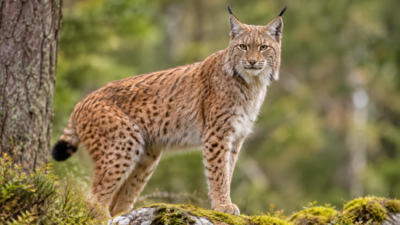
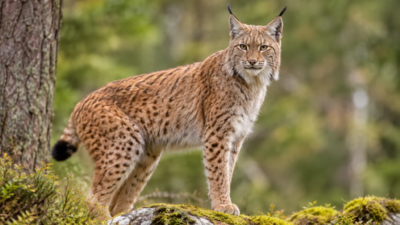
Could one of Britain’s lost wild predators return to its forests after more than 1,300 years? A conservation group hoped to make that possible by bringing three Eurasian lynx to Northumberland’s Kielder Forest for a monitored trial. The proposal aimed to explore whether the large wild cats could once again play a role in Britain’s natural ecosystem, particularly by helping control deer populations. However, the plan faced a legal obstacle before the animals could be released, leading the organisation to challenge the decision of the country’s wildlife regulator.In a judgment delivered on October 30, 2026, in R (Lynx UK Trust Community Interest Company) v Natural England ([2026] EWHC 2761 (Admin)), the High Court dismissed the conservation group’s judicial review challenge. According to the primary judgment available through The National Archives, Ms Justice Obi ruled that permission to release lynx under the Wildlife and Countryside Act 1981 would not remove the separate legal requirements of the Dangerous Wild Animals Act 1976. The court found that the challenge to Natural England’s refusal to assess the revised proposal had been brought too late and that, in any event, it would have failed on its merits.
Why conservationists wanted to bring lynx back
The Lynx UK Trust Community Interest Company, a not-for-profit organisation promoting the conservation and reintroduction of lynx, had been exploring the possibility of bringing the species back to Britain for several years. Eurasian lynx are large wild cats that once lived in the country but have been extinct in the United Kingdom for more than 1,300 years. The organisation believed their return could support biodiversity and nature recovery by restoring the ecological role of a native apex predator. One expected benefit was their potential impact on deer populations, which can affect woodland regeneration and vegetation.The group first approached Natural England in 2015. In July 2017, it applied for permission to release six lynx into Kielder Forest as part of a five-year trial. However, Natural England’s technical assessment found that the proposal did not meet the International Union for Conservation of Nature’s guidelines. Concerns included insufficient ecological assessment, funding, organisational capacity, engagement with landowners and local communities, and monitoring arrangements. On November 30, 2018, the Secretary of State accepted Natural England’s advice and refused the application.
A smaller proposal involving three lynx
The conservation group later prepared a revised plan. Submitted in draft form on May 30, 2022, the new proposal involved releasing three lynx, two females and one male, into Kielder Forest for a three-year trial. The animals would be captured in Sweden and transported to Britain. They would initially stay in specially built enclosures for quarantine and acclimatisation before being gradually released into the forest. The plan also included tracking, veterinary supervision and arrangements to recapture the animals if necessary.The organisation said it would remain responsible for the health and welfare of the lynx and their offspring throughout the trial. However, another legal issue emerged. Lynx are included in the list of dangerous wild animals regulated under the Dangerous Wild Animals Act 1976. Natural England, the UK government’s advisory body on the natural environment, believed that even if the group received a release licence under the Wildlife and Countryside Act, it would still need to comply with the separate law governing the keeping of dangerous animals.On July 1, 2022, Natural England informed the organisation that it would not conduct a full assessment of the proposal because there was no foreseeable legal route for the release to proceed. It maintained this position in subsequent correspondence.
What the conservation group argued in court
The Lynx UK Trust challenged Natural England’s decision, arguing that the two laws should be interpreted differently. Under the Wildlife and Countryside Act, releasing certain non-native animals into the wild requires a licence. The group argued that once such permission was granted, the Dangerous Wild Animals Act should no longer prevent the release.It also argued that the two laws were inconsistent and that the later Wildlife and Countryside Act should take precedence where the proposed release was authorised. Alternatively, the organisation maintained that Natural England should have assessed its application rather than refusing to consider it because of the separate legal requirements. Natural England and the government disagreed, arguing that the two laws served different purposes and could operate together.
Why the High Court rejected the challenge
Ms Justice Obi ruled that the Dangerous Wild Animals Act continued to apply even after an animal was deliberately released. Under Section 7(1) of the Act, a person who stops possessing an animal remains legally responsible as its keeper until another person becomes its keeper. The judge explained that the law did not limit this continuing responsibility to situations involving an animal escaping or being lost. Therefore, a licence under the Wildlife and Countryside Act would not automatically end the obligations under the Dangerous Wild Animals Act.She also rejected the argument that the later legislation had implicitly overridden the earlier law. The two Acts dealt with different legal responsibilities and could operate alongside each other. The court refused permission on this ground, finding that the challenge was not brought promptly and was outside the time limit prescribed by CPR 54.5. The regulator had communicated its decision on July 1, 2022, while the judicial review proceedings were not filed until December 17, 2025. The judge also said Natural England was entitled to consider the legal obstacle and the public resources required for a full assessment.The claim was therefore dismissed. The ruling leaves the proposed lynx trial without the regulatory approval it sought, but it does not settle the wider scientific or environmental debate about whether the species should return to Britain’s forests.