







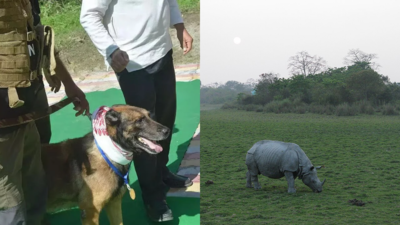
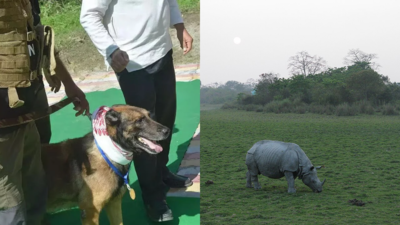
In the forests of Assam’s Kaziranga National Park, where one-horned rhinoceroses have long faced the threat of poaching, one of the most determined members of the anti-poaching force had four legs, a sharp nose and an extraordinary instinct for following a trail. His name was Zorba, a Belgian Malinois who helped forest officials track down more than 60 poachers during his career. From recovering crucial evidence from a pond to following the blood trail of an injured suspect for nearly 1.5 km, the canine became an unlikely but formidable ally in the fight to protect India’s wildlife.Zorba, who was part of Aaranyak’s K9 unit, India’s first dog squad dedicated to wildlife crime, died in Guwahati on November 21, 2022, aged 12.
US Midterm Election Results 2026
His death marked the end of an extraordinary career that had taken him through some of Assam’s most important wildlife habitats. Yet, for the conservationists and handlers who worked alongside him, he was much more than a trained sniffer dog. He was a colleague, a companion and a conservation hero.
How Zorba became Assam’s first anti-poaching dog
Zorba’s journey began in 2011, when biodiversity conservation organisation Aaranyak established a K9 unit in Assam to assist forest officials in tackling wildlife crime. He was the first dog inducted into the squad and was deployed in Kaziranga, where rhino poaching had become a serious conservation concern. The challenge for forest personnel was not limited to catching poachers at the scene. Suspects frequently escaped into the dense vegetation, leaving officials with little evidence beyond footprints, discarded objects or other traces of their presence. Zorba brought an important new ability to these investigations: his extraordinary sense of smell.A 2018 report by Mongabay, which documented his work in Kaziranga, described how the Belgian Malinois was trained to follow scents and locate people hiding in the forest. His handler, Goura Baidya, was particularly impressed by his determination once he picked up a trail. “Once set tracking, after made to sniff a scent, he is simply unstoppable, no matter what comes his way,” Baidya told Mongabay.The partnership between the dog and his handler became an important part of the K9 unit’s work. Zorba was not simply sent into the forest to search independently; he worked alongside trained personnel who interpreted his signals and helped turn his tracking abilities into actionable evidence.
The camera trap he pulled out of a pond
Among Zorba’s most remarkable operations was an investigation in which he helped recover a camera trap from a pond. The device had photographs of poachers in action, making it an important piece of evidence for investigators. Finding the camera was no ordinary task. It required Zorba to identify and follow a scent trail, eventually locating an object that might otherwise have remained undiscovered. The recovered photographs helped authorities identify those involved and make arrests.In another operation, the dog followed a blood trail left by an injured poacher for nearly 1.5 km. His ability to stay on the trail helped forest officials locate the suspect, demonstrating how a dog’s sense of smell could make a difference in difficult investigations across the forest.His contribution was not restricted to Kaziranga either. Zorba was also deployed in other protected areas, including Orang National Park and Pobitora Wildlife Sanctuary. In one incident in Orang, he followed a suspect’s scent from the crime scene to a house outside the park. The clues he provided helped authorities identify the residence and arrest the accused.
More than 60 poachers tracked during his career
By 2018, Zorba had assisted in 18 successful operations and was credited with helping secure nearly 30 arrests, according to Mongabay’s report. The figure increased over the following years. By August 2022, reports citing Aaranyak credited him with helping law enforcement agencies track down more than 60 poachers, including around 50 in Kaziranga. His contribution also helped establish the importance of trained dogs in wildlife crime investigations.What began with one Belgian Malinois gradually developed into a larger K9 unit. By August 2022, the squad had seven dogs, with two more undergoing training, according to a PTI report. The dogs assisted forest and police personnel in tracking suspects, identifying escape routes and locating evidence following poaching incidents. Aaranyak’s initiative demonstrated how canine units could strengthen conservation efforts, particularly in areas where following human tracks through difficult terrain was challenging.Dr Bibhab Kumar Talukdar, Aaranyak’s secretary general and chief executive, described Zorba as a conservation hero. His contribution, Talukdar said, would always be remembered.
A ball-loving dog who became a conservation hero
For all his determination during operations, Zorba also had a playful side. His handlers remembered him not only for the trails he followed but also for the simple things he enjoyed. A report on his death quoted a member of the K9 unit recalling Zorba’s particular fondness for playing with balls. The handler said that beyond their professional relationship, he would miss playing with the dog.Another handler, Mrigen Das, spoke of his special affection for Zorba because of the work the canine had done. His first handler, Anil Kumar Das, also remembered him as an inspiration and said he had immensely rich memories with him.After being relieved of active duty in December 2019, Zorba remained at Aaranyak’s K9 unit centre. In August 2022, he was honoured for his service with a traditional Assamese gamosa and a citation on Independence Day.He died in Guwahati on November 21, 2022, following age-related health problems. His passing was mourned by wildlife conservationists and those who had worked with him. Aaranyak remembered him as one of the most important members of its wildlife protection efforts.