








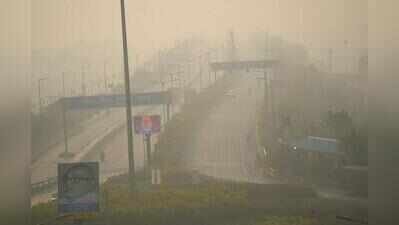
Patna: Diwali may be over, but its pollution hangover continues to choke Bihar. Patna’s air quality index (AQI) climbed to 280 at 4pm on Monday, the highest reading recorded in the city so far this year. The reading pushed the city into the ‘poor’ category for the third time in 2026, marking a sharp deterioration after almost 10 months.According to Bihar State Pollution Control Board (BSPCB) monitoring data at 4pm on Monday, Patna City recorded the highest AQI of 356 in very poor zone, followed by Samanpura at 294. DRM Office, Danapur, and Rajbansi Nagar both recorded 284, while Planetarium registered 273. Muradpur, comparatively, recorded a lower AQI of 189.Patna’s AQI stood at 150 on Saturday before climbing to 186 at 4pm on Sunday, according to the Central Pollution Control Board (CPCB) bulletin. By Monday, it reached 280, indicating a steep rise in pollution after Diwali. Firecracker emissions added to the city’s existing pollution burden from vehicular traffic, road dust and construction activities.The pollution spike was not confined to the state capital. Other districts reported alarming air quality on Monday. Hajipur recorded an AQI of 335, followed by Bettiah at 304, Ara at 290 and Muzaffarpur at 286. Siwan reported 256, while Begusarai stood at 228 and Buxar at 202.Several other cities recorded moderate air quality. Bhagalpur and Gopalganj reported 190 each, as did Motihari and Biharsharif. Araria recorded 175, Rajgir 165, Gaya 161, Jamui 155, Chhapra 154, Darbhanga 153 and Kishanganj 148. Aurangabad stood at 139, Katihar at 136, Saharsa at 128, Purnia at 124 and Munger at 119. Sasaram, with an AQI of 87, recorded the cleanest air among the listed locations.The deterioration has raised concerns over the health impact of post-Diwali pollution, particularly on children, elderly people and those suffering from respiratory and cardiac ailments. Prolonged exposure to poor air quality can cause breathing discomfort and aggravate existing respiratory conditions.With winter approaching, the situation could become more challenging. Low temperatures, calm winds and unfavourable atmospheric conditions may slow the dispersal of pollutants, allowing them to remain concentrated near the ground. The spike has renewed focus on controlling road dust, vehicular emissions and construction pollution.The BSPCB, however, attributed the sudden spike largely to unfavourable meteorological conditions rather than firecrackers alone. A senior official said this year’s Diwali had witnessed comparatively less firecracker use than the previous year, but the festival coincided with the onset of winter.“The inversion layer has descended, trapping pollutants closer to the ground and increasing their concentration. Dew formation and changing weather conditions have also contributed to the rise in AQI,” he said.