







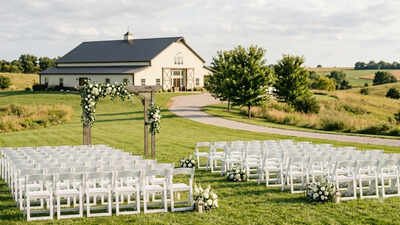
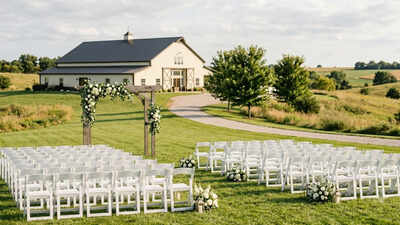
A couple in Kansas, United States, who planned to build a wedding venue have received another opportunity to pursue part of their legal case against Leavenworth County. George Daniel Lynch and Cynthia Lynch, who own Whiskey Ridge, LLC, had sought damages of at least $550,000 after a dispute over building permits and fire safety requirements. The Kansas Court of Appeals has now ruled that one of their constitutional claims can proceed, while upholding the dismissal of their other claims.According to the court documents, the dispute began in April 2020, when the couple’s business received a special use permit to build a wedding venue. At the time, the permit did not require the proposed building to have a fire suppression sprinkler system. However, construction did not begin immediately because of the COVID-19 pandemic.More than two years later, when the business approached the county for a building permit, it was informed that its original special use permit had expired. During that period, the county had also adopted a building code requiring sprinkler systems in buildings such as the proposed venue. This meant Whiskey Ridge could no longer proceed under the conditions of its original permit.The disagreement eventually reached the courts, with the couple and their businesses accusing the county of unfair treatment and seeking compensation for the additional expenses they claimed to have incurred. On Friday, the Kansas Court of Appeals partly overturned an earlier decision dismissing the case, allowing the couple’s equal protection claim to move forward.
Two-year delay changed plans
According to the court’s opinion, Whiskey Ridge received its original special use permit in April 2020. The proposed venue was to be built mainly from steel and concrete, with some wood used in its construction. The permit did not include a requirement for a sprinkler system.However, the pandemic delayed construction for more than two years. When Whiskey Ridge returned in mid-2022 to seek a building permit, county officials informed the business that its earlier special use permit had lapsed and that a new one would be required.Another change had taken place in the meantime. In December 2020, Leavenworth County adopted the 2006 International Building Code, which required buildings such as the planned wedding venue to have fire suppression sprinklers.Whiskey Ridge sought an exemption from this requirement through the County Board of Building Codes Appeals. The board rejected its request.Despite the disagreement, the business went ahead with construction. The county subsequently issued temporary permits allowing the venue to operate without sprinklers, provided a firetruck and personnel were present during events.The county commission later rejected the business’s application for a new special use permit without the sprinkler requirement. Whiskey Ridge eventually installed the system, after which the county approved a new permit.
Couple sought more than $550,000
Whiskey Ridge claimed that the county’s decisions had caused substantial additional expenses. Its legal complaint linked those costs to the refusal to recognise the original permit, the rejection of its request for an exemption and the conditions imposed on its temporary operations.The plaintiffs also alleged that two senior county employees had indicated that a sprinkler system would not be necessary if the business obtained a variance or waiver from the state fire marshal.According to their allegations, they obtained the required relief, but county commissioner Mike Stieben and others subsequently influenced the state fire marshal to withdraw it.These allegations formed part of the business’s claims that officials had improperly interfered with its business interests.The lawsuit sought compensatory damages of “not less than $550,000.” However, the district court dismissed all the claims. Whiskey Ridge then appealed that decision.
Appeals court allowed one claim t
The Kansas Court of Appeals examined several legal claims, including alleged interference with business interests, unequal treatment, violation of substantive due process rights and unlawful taking of property.The judges found that Whiskey Ridge had failed to pursue available legal remedies against certain county decisions within the required time. Kansas law generally provides 30 days to challenge the relevant zoning and county commission decisions in district court.Because Whiskey Ridge had not taken those steps, the appeals court upheld the dismissal of its three tortious interference claims. It directed, however, that those claims be dismissed without prejudice rather than with prejudice. The court reached a different conclusion on the equal protection claim.Whiskey Ridge had alleged that another wedding venue, operating from a refurbished building made mainly of wood, had been allowed to obtain a special use permit without installing a sprinkler system.The judges found that this comparison was sufficient for the equal protection claim to proceed at the initial stage of litigation. They also concluded that the district court had applied an incorrect procedural standard when assessing the claim. The appeals court therefore ordered the equal protection claim to be reinstated.
What happens next ?
The ruling does not mean that Whiskey Ridge has proved the county treated it unlawfully or that it is entitled to the compensation it requested.The appeals court upheld the dismissal of the substantive due process claim and the claim that the county had unlawfully taken a protected property interest.On the property claim, the judges noted that county regulations treated a special use permit as abandoned if the permitted activity had ceased for 12 consecutive months. Because Whiskey Ridge had not acted on its original permit for approximately two years, the court concluded that the county had properly considered it abandoned.The case will now return to the district court for further proceedings on the equal protection claim. The lower court must also amend its judgment to reflect that the tortious interference claims were dismissed without prejudice.