








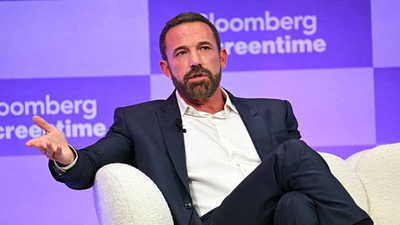
Hollywood actor Ben Affleck co-founded the Eastern Congo Initiative (ECI) in 2010 to support locally led development in the Democratic Republic of Congo (DRC). By 2024, initiatives supported by the organisation were delivering more than 100 million litres of clean water across 10 service zones in eastern Congo, according to ECI’s official website. The organisation also reported that its supported initiatives enabled more than 400,000 people to access essential health services that year, highlighting the scale of its work beyond emergency aid.Founded by Affleck and social entrepreneur Whitney Williams, ECI focuses on supporting Congolese communities and organisations working to improve access to essential services, strengthen livelihoods and advance justice. Rather than relying exclusively on externally designed aid programmes, it says its approach centres on local leadership and partnerships with community-based organisations.The clean-water figures reflect the role of Asili, a social enterprise that provides water and healthcare services in South Kivu province. ECI acquired Asili in 2020, building on an initiative designed to make essential services more accessible and financially sustainable for local communities.
From Hollywood activism to community-led development
Affleck’s involvement in eastern Congo began with visits that exposed him to the resilience of communities living amid conflict and persistent development challenges. According to ECI, these experiences helped inspire the organisation’s establishment in 2010.ECI describes itself as the first US-based organisation dedicated exclusively to supporting communities in eastern Congo through advocacy and grant-making. Its work includes funding local organisations and backing initiatives intended to strengthen economic opportunities and access to essential services.Williams co-founded the organisation with Affleck and has served as its vice chair. The organisation’s model emphasises working alongside Congolese leaders rather than treating communities solely as recipients of international assistance. Over the years, its work has expanded across several areas, including agriculture, social enterprise, healthcare and justice. Asili became one of its flagship initiatives, bringing water services and primary healthcare closer to communities that often face difficulties accessing reliable infrastructure.
Asili: a water network designed around local needs
Asili, whose name means “foundation” in Swahili, was developed as a social enterprise to provide essential services through a locally operated model. Its origins date to a 2013 human-centred design process led by IDEO.org and funded by the United States Agency for International Development (USAID), with the American Refugee Committee, now known as Alight, serving as an incubating partner.Local women were involved in shaping the enterprise from its early stages. According to Virridy Carbon’s overview of the water network, seven Congolese mothers participated in the design process, contributing to decisions ranging from the business plan to the organisation’s identity.Asili was launched in South Kivu in 2014. ECI acquired it in August 2020, and it now operates as an independently registered local organisation. Its approach combines water access, primary healthcare and other community services rather than treating clean water as a stand-alone intervention.The model is intended to provide communities with a more consistent source of essential services. Its water stations are operated by locally employed women known as “Water Mamas”, who manage water sales and interact with customers. Virridy reports that the network also employs skilled plumbers to maintain the infrastructure.
100 million litres of water delivered in 2024
ECI’s reported 2024 figures offer an indication of the scale of the programme. According to the organisation’s official impact page, its supported initiatives delivered more than 100 million litres of clean water across 10 service zones during the year.Virridy’s overview provides further details about the network’s infrastructure, reporting 69 water stations across South Kivu, 84 Water Mamas and 27 skilled plumbers. It also records approximately 60 kilometres of pipeline installed since the network was established.The two organisations report water volumes using different measures. ECI’s figure refers specifically to delivery during 2024, while Virridy lists 414 million litres as the network’s cumulative total in its 2024 overview. These figures should not be treated as competing estimates of the same period.The system’s locally operated structure is another important part of the initiative. Water Mamas earn income through their work at the stations, while maintenance staff help keep the network functioning. The arrangement links access to clean water with local employment, allowing residents to participate in the service’s day-to-day operation.
Clean water during displacement and conflict
The programme’s importance became particularly visible during the displacement crisis in eastern Congo. In 2024, fighting forced people from their homes, placing additional pressure on communities and basic services in areas receiving displaced families.In a November 27, 2024, update published on GlobalGiving, ECI described its response in Minova, an agricultural and fishing village in eastern DRC. The organisation said it had installed two piped-water systems serving major host areas and extended its network to provide water to displaced families.The initiative also distributed more than 3,000 jerry cans to help households collect and store water. Its local water point remained open daily, while healthcare teams provided medical assistance to displaced people and host communities.A subsequent report published on March 25, 2025, said a 400,000-litre reservoir in Minova had supplied more than 18 million litres of water between June and November 2024. The report described the reservoir as an important resource for residents and displaced people, with the network also extended to two major displacement camps.The response continued into 2025. In a report dated July 31, 2025, ECI said it had distributed more than 11.1 million litres of safe drinking water between January and June alone. Since the previous June, it reported that more than 30 million litres had reached displaced people and local residents.These figures relate to the specific emergency response in Minova, not the entire Asili network. They nevertheless illustrate how local water infrastructure can support communities during periods of heightened need.
A longer-term approach to essential services
ECI’s work in eastern Congo extends beyond water delivery. The organisation says its supported initiatives enabled more than 400,000 people to access essential health services in 2024, alongside the clean-water programme. Its approach reflects an effort to connect humanitarian needs with longer-term development by supporting locally led organisations and infrastructure. Asili’s water stations, healthcare facilities and locally employed operators form part of that strategy.The model does not remove the wider challenges facing eastern Congo, where conflict and displacement continue to disrupt access to essential services. But the reported water-delivery figures demonstrate the reach of a network designed to operate within local communities.For Affleck and Williams, the initiative they founded in 2010 has developed into a broader effort to support Congolese-led solutions. By 2024, the clean-water programme had reached a scale exceeding 100 million litres delivered in a year across 10 service zones, while its emergency response in Minova showed how the infrastructure could also be used to assist displaced families.