







A small shift in how groundwater is collected is making a measurable difference at California’s Santa Susana Field Laboratory. According to a report by the U.S. Department of Energy, the solar-powered pumping system installed in 2024 has already removed more than 65,000 gallons of contaminated groundwater from one cleanup area, accounting for nearly 70% of all the water pumped from the site since cleanup efforts began in 2017. The system has allowed the U.S. Department of Energy to move from a labor-intensive pumping process to a more frequent, automated operation, increasing the amount of impacted groundwater that can be captured and sent for treatment.
A faster approach to groundwater removal
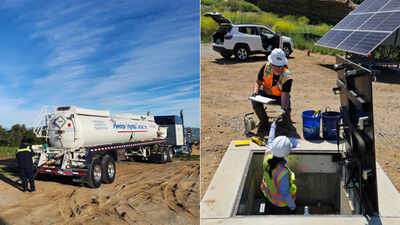
According to the online report, the pump operates at the Former Sodium Disposal Facility, or FSDF, in Area IV of the Santa Susana Field Laboratory and the Department of Energy is responsible for remediation of the area, where liquid metals and nuclear energy research was previously conducted at the Energy Technology Engineering Center. Before the automated system was installed, groundwater removal relied on manually lowering a pump into a well through a borehole. The process limited how frequently water could be collected and required personnel and equipment to operate the system.That changed in May 2024, when DOE completed installation of a solar-powered automated pumping system. It became fully operational the following month, adds the report.The new setup can pump groundwater seven days a week, without relying on electricity from the grid or a generator. That has allowed the cleanup operation to run more consistently while increasing the volume of water that can be removed from the affected area.
65,000 gallons removed in two years
As of August, the solar-powered system had removed more than 65,000 gallons of contaminated groundwater. That represents almost 70% of the roughly 94,000 gallons removed from the FSDF since DOE began manually pumping groundwater in 2017. The figures highlight how significantly the newer system has accelerated removal at the site. Water captured through the cleanup effort is not released back into the environment. Instead, it is transported to a certified off-site facility, where it undergoes treatment and safe disposal.The pumping is part of interim cleanup measures designed to capture and remove contaminated groundwater and help protect surrounding groundwater resources while broader remediation work continues.
Turning sunlight into a cleanup tool
According to the department, the system also demonstrates how relatively simple infrastructure can support long-running environmental work. By using solar power to operate automated equipment, the FSDF pump can continue collecting groundwater without the logistical demands associated with conventional power sources.For a cleanup site where groundwater removal has been underway for nearly a decade, the change has produced a notable result in just two years. More than 65,000 gallons have now been taken out of the ground, treated and safely disposed of, adding another chapter to the ongoing effort to address contamination at the former research facility.Images Courtesy: U.S. Department of Energy