







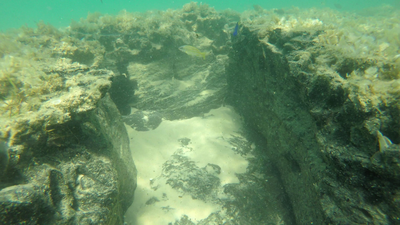
Sometimes, drowning can give someone (or something) a new lease on life. This is a 5000 year old story of a drowned forest off Mozambique, which have now become living reefs.Off the coast of Mozambique, beneath the shallow waters near Bazaruto, scientists have found the remains of forests that died thousands of years ago, but are now supporting life in the sea. This new study published in Scientific Reports describes the ancient terrestrial forests ‘reborn’ as modern marine ecosystems under shifting sea levels.
Forests that became seabed
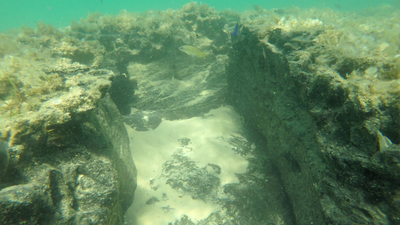
The story begins with sea-level change. After the last Ice Age, melting ice raised global sea levels, gradually flooding low-lying coastal land. In the Bazaruto region, swampy forests and peaty ground were submerged. Over time, waves and currents removed much of the surrounding sediment, leaving patches of ancient peat exposed like hard, uneven platforms on the ocean floor.Radiocarbon dating suggests the peat ranges from about 300 to 5,000 years old. The oldest samples date to the mid-Holocene, a period when seas were rising and coastlines were shifting. What remains is not simply mud. Peat is dense, partly decomposed plant material, rich in organic carbon. On the seabed, it forms ridges, blocks and crevices; enough structure for marine organisms to settle on, hide in and feed around.Seagrasses and macroalgae now grow across parts of these surfaces. Sponges, oysters and other invertebrates occupy the harder areas. Small fish shelter among the nooks, while larger animals move through the surrounding water. In other words, a forest floor has become a nursery.
What is the difference between coral and peat reefs?
The term ‘reef’ can be misleading. Coral reefs are built largely by coral animals, which create limestone skeletons over long periods. The Mozambique peat reefs contain no living coral at all. Their structure comes from plants that grew on land, died, were buried in waterlogged conditions and survived beneath the sea.The researchers compared peat reefs with a nearby coral reef and found substantial overlap in the animals using them. They recorded 41 small-fish species and 44 megafauna species shared between the two habitat types. Sharks, rays, turtles and other large animals were among those observed around the peat reefs.The seafloor communities themselves are very different. Coral reefs are dominated by living coral; peat reefs are dominated by exposed peat, algae and seagrass. But mobile animals do not respect those boundaries. They move between habitats, using peat reefs for shelter, feeding and breeding.. In a seascape where coral is under pressure from warming water, pollution and other human impacts, such alternative habitats make peat reefs complementary and not secondary.
Carbon beneath the waves
This study also found that the Mozambique material contained up to 40% organic carbon by dry weight! Peat is one of the planet’s most carbon-rich soils. When such landscapes are drowned, that carbon can still remain stored in the seabed for centuries, or even a millenia!Scientists call carbon stored in coastal and marine ecosystems ‘blue carbon’. Mangroves, seagrass meadows and salt marshes are the usual examples. These submerged peat reefs add a more unusual possibility: ancient terrestrial carbon that has been preserved offshore.The researchers have not yet calculated how much carbon the entire reef system stores. But the finding suggests that rising seas may be exposing previously unknown carbon-rich habitats, with consequences for both biodiversity and climate accounting.
A changing, fragile seascape
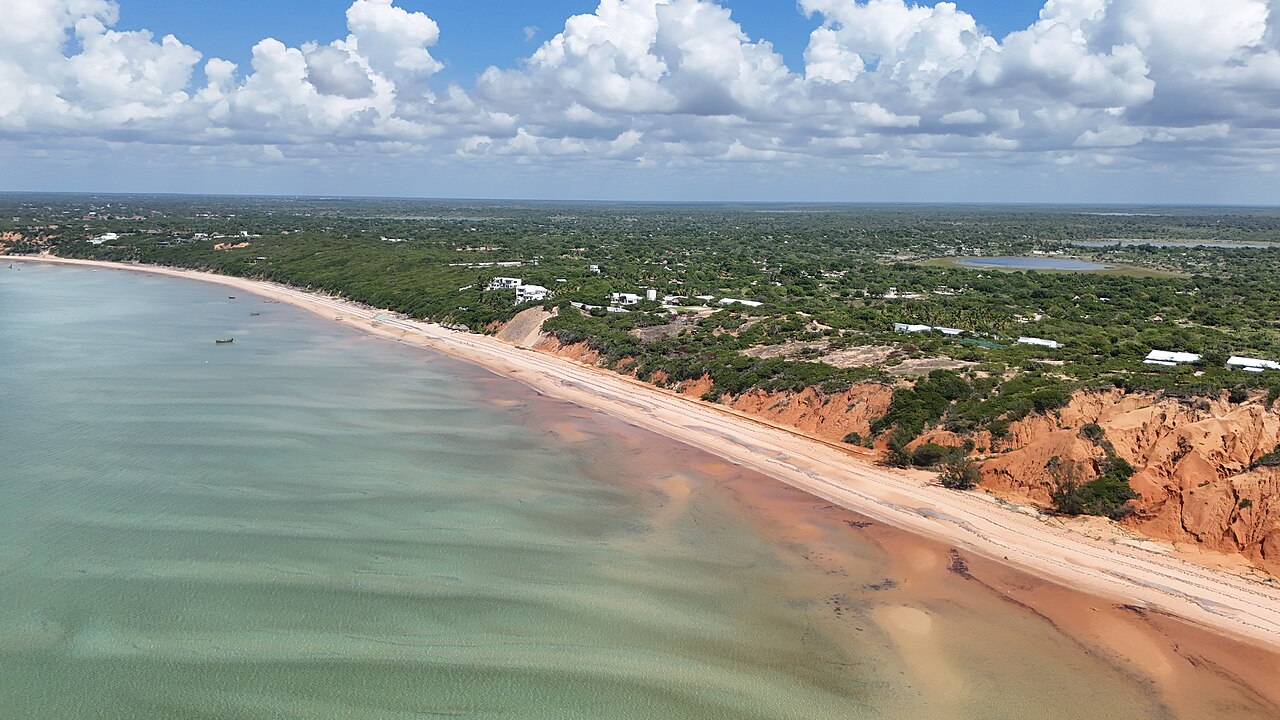
Image Credits: WikiMedia Commons
These reefs are not fixed monuments. Storms, tides and currents can bury peat, expose new patches, break blocks apart or move them across the seabed. That instability may be part of their ecological value: disturbance creates fresh surfaces for algae, seagrass and invertebrates to colonise.But it also makes them vulnerable. If coastal development, dredging or climate-driven erosion alters the balance of sediment and wave energy, these habitats could be damaged before scientists fully understand them.The study’s authors argue that peat reefs should be included in coastal and marine conservation planning. They are currently absent from many conventional frameworks, partly because they do not fit neatly into established categories such as coral reef, seagrass meadow or mangrove forest.That gap is understandable. Conservation systems are often designed around habitats we already know. Discoveries like this show why mapping the seabed remains essential.