











For Clare Naylor and her family, winter heating once meant keeping a close eye on the energy meter. The Milton Keynes household used hot-water bottles, extra blankets and jumpers to make sure its heating costs stayed within budget. That has changed after their four-bedroom detached house was fitted with solar panels, a heat pump and a large battery. The retrofit has effectively turned the property into a small power station, allowing it to generate and store electricity and send surplus power back to the grid. The family can now use Octopus Energy’s Zero Bills tariff, which guarantees no energy bills for five years as long as the household stays within its agreed fair-usage limit.
How the Naylors turned their home into a mini power station
The Naylors’ home in Milton Keynes was built in the 1980s, but it has recently undergone a major energy retrofit. The property now has 17 solar panels, a heat pump, a large battery in the garage and four new radiators. Together, the equipment allows the house to produce electricity, store it and use it for heating and everyday household needs.The changes mean the home can operate under Octopus Energy’s Zero Bills tariff. The system is designed around homes that generate slightly more energy over the course of a year than they are expected to consume. Surplus electricity can then be sold back to the grid, helping to support the economics of the tariff.For the Naylor family, that means their home is no longer simply consuming energy from the grid. It can also produce and store energy, making the property function more like a small-scale energy system.
Solar panels, battery and heat pump work together
Each part of the retrofit has a different role. The solar panels generate electricity, while the battery stores energy so it can be used when required. The heat pump replaces the household’s gas boiler as the main source of heating.The property also needed four new radiators as part of the upgrade. To qualify for the Zero Bills tariff, the house cannot use gas, including for cooking, so the family had its gas boiler removed.Nigel Banks, technical director of Zero Bills at Octopus Energy, told The Guardian that properties generally need good insulation alongside solar panels, a heat pump and a battery. The aim is for the home to generate enough energy to cover its expected use, with additional electricity potentially sold to the grid.The tariff does come with conditions. The Naylor family must stay within a fair-usage limit, while charging an electric vehicle is not covered by the zero-bill promise.
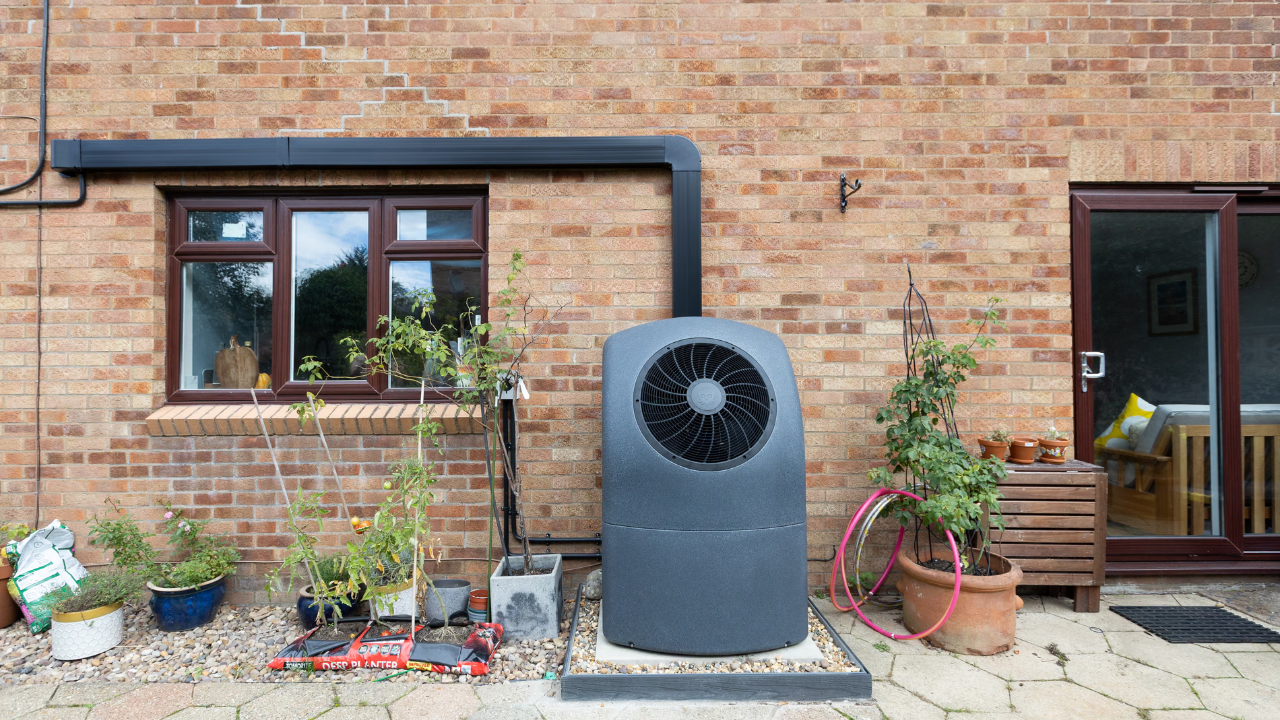
the heat pump installed at the rear of Clare Naylor’s home (Image: Teri Pengilley/The Guardian)
The family used to spend about £130 a month on energy
Before the retrofit, the Naylors were already relatively careful with their energy use. Clare Naylor told The Guardian that the household generally kept the heating at 18C, increasing it only when family members visited. During colder periods, the family relied on slippers, hot-water bottles and jumpers to stay comfortable without pushing up their bills.Their energy costs were around £130 a month. Under the new arrangement, Naylor says that money can instead go towards holidays. The difference is also changing how the family plans to use its home. Naylor said she intends to heat the house before her children return from school, something the family did not previously do because of the need to keep energy spending under control.The change comes as British households face higher energy costs. The price cap rose by 4% on 1 October 2026, while a further increase had been predicted for January.
The retrofit would have cost almost £20,000
The technology came without an upfront cost for the Naylors because Santander funded the retrofit as part of a project examining ways to improve the energy efficiency of existing homes. The solar panels, heat pump and battery would have cost just under £20,000 after a government grant if the family had paid for the work itself.The project also highlights one of the biggest challenges in making older homes more energy efficient, financing the upfront cost. Santander is exploring ways to help households fund retrofits, while its existing home-improvement loan would mean repayments of £389 a month over five years for a £20,000 project at an interest rate of 6.4%.Octopus Energy’s Zero Bills tariff has already been used in hundreds of new-build homes since its launch five years ago. The company is now testing whether the model can work in older properties that need retrofitting, using the Naylors’ home as an example.For the family, the immediate result is a home that can generate and store much of the energy it needs while avoiding energy bills under the tariff’s five-year guarantee. As Naylor prepares for winter, she plans to keep the house consistently warm and, she jokes, teach her children to remember to keep the doors shut.