








On the morning after Diwali’s Amavasya ends, Gujarat wakes up to a new year. Doorbells ring early with neighbours wishing “Saal Mubarak.” Shopkeepers open fresh account books. Families visit temples in new clothes. A few hundred kilometres south, in Maharashtra, wives perform aarti for their husbands to celebrate Diwali Padwa. In many parts of India, the same day honours a demon king so generous that the gods themselves had to step in. This is Bali Pratipada. In India in 2026, it falls on Tuesday, November 10, the first day of the bright half of Kartik, the same day as Govardhan Puja and Annakut.
The King Who Gave Too Much
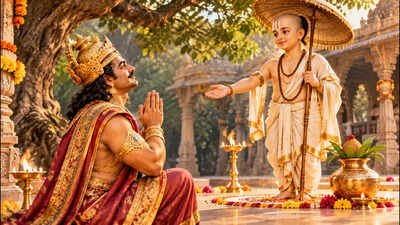
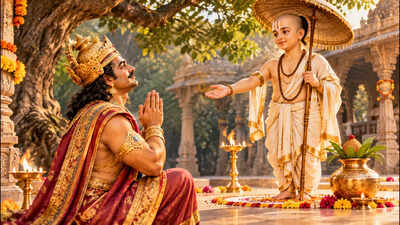
Mahabali was the grandson of Prahlad, Vishnu’s great devotee. Though born among the asuras, he was a wise and fair ruler. His rule was a prosperous one for the people; his liberality was renowned. No one ever left his court empty-handed.His power grew so great that he conquered the three worlds, including the gods’ heaven. Worried, the gods turned to Vishnu.Vishnu took the form of Vamana, a small Brahmin boy, and came to Bali’s great yajna. Bali, true to his nature, offered the boy anything he wished. Vamana asked for only as much land as he could cover in three steps.Bali’s guru, Shukracharya, saw through the disguise and warned him. But Bali refused to break his word.Vamana then grew enormous. With his first step, he covered the earth. With the second, the heavens. There was no space left for the third. Bali bowed his head and offered it for the final step. Vishnu placed his foot on Bali’s head and sent him down to Patala, the underworld.
The Promised Return
Vishnu was moved by Bali’s honesty and devotion. He granted him a boon. Bali would rule Patala, and once a year, he could return to earth to visit his people.In Kerala, that return is celebrated as Onam. In much of the rest of India, people mark it on Bali Pratipada, the day after Diwali’s Amavasya.The story carries an unusual lesson. Bali, technically a demon, is remembered with love. His generosity and truthfulness earned him a place in Vishnu’s grace. Some see in it the idea that good rule and keeping one’s word matter more than the label one is born with.In Maharashtra, a popular saying expresses the longing for his era, asking that troubles depart and Bali’s kingdom return.
Gujarati New Year: Bestu Varas
For Gujaratis, this day is Bestu Varas, the start of the new year in the Vikram Samvat calendar followed in Gujarat. In 2026, Samvat 2083 begins here.The day often starts before dawn. In many homes, someone buys salt early in the morning, called “sabras,” meaning “all good things,” as a sign of a full, balanced year. Families dress in new clothes, visit temples and seek blessings from elders.Business families open their new account books, already worshipped during Chopda puja on Diwali night. Friends and relatives exchange greetings of “Nutan Varsh Abhinandan” and “Saal Mubarak,” and homes stay open for visitors all day.
Diwali Padwa in Maharashtra
In Maharashtra, the same day is Diwali Padwa, a celebration of married couples. Wives perform aukshan, a small aarti, for their husbands. Husbands give gifts in return. Newly married couples often visit the bride’s family for a special meal.Padwa is also counted among the sade teen muhurat, the three and a half most auspicious days of the year, when new ventures can begin without needing a separate muhurat. This day counts as the half.
How Bali Is Honoured
In parts of Maharashtra and Karnataka, people draw images of Bali and his queen, Vindhyavali, with rangoli colours or shape them from cow dung in the courtyard. People worship them with flowers, rice, and lamps. Some households offer food to Bali, welcoming him as a guest.Across regions, the day carries the same warmth. It celebrates new beginnings, honest dealings and the hope of a just, generous rule, the kind Bali was remembered for.