









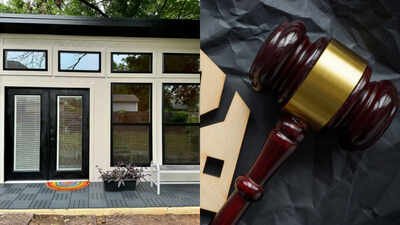
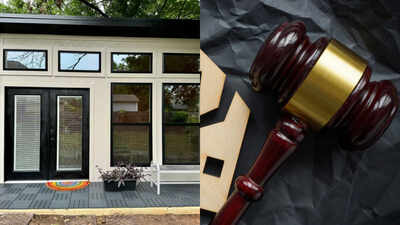
In a Texas case, a homeowner challenged an association’s rejection of her proposed backyard office on the ground of an alleged height violation. Six years after the application was rejected, the Texas Third Court of Appeals awarded her $100,000 in attorney fees, leaving the homeowners’ association with the heavy legal tab.
Backyard project faces opposition
The dispute began in 2020 when Masha Davis, a resident of the Davis Spring subdivision in Williamson County, Texas, applied to build an accessory structure in her backyard. Davis described the proposed addition as a home office, while the homeowners’ association described it as a shed or shed-like structure in court proceedings.The Texas Third Court of Appeals said the association’s Architectural Review Committee denied the application, finding the proposed building exceeded the height allowed and rose above the roofline.Davis appealed, arguing that the recorded declaration of the community and its enforceable design guidelines did not include a height restriction that would prohibit her proposed structure. She sued Davis Spring Property Owners’ Association and its board president, Amanda Mock.
Court finds no applicable height limitation
The issue in the case was the power of the association to enforce the architectural restrictions and whether the decision of the association was based upon the governing documents.The trial court considered the 2002 Design Guidelines, the only guidelines on record when Davis submitted her application. It concluded that those guidelines had no height limitation which prevented her accessory structure from being erected.Thus, the court concluded the architectural committee had no basis to deny the application on the stated height-related grounds. It also did not find any restrictive covenant that would prevent Davis from building the structure as submitted.The Texas Third Court of Appeals, in reviewing the later dispute over legal expenses, described these earlier findings.
Long legal battle comes at steep price
Davis also made several other claims, including allegations involving breach of fiduciary duty and fair housing violations, which were dismissed during the proceedings, but Davis’s challenge to the restrictive covenants remained.The litigation was a legal marathon that lasted more than four years. Her lawyer submitted bills showing approximately 300 hours of attorney time and another 37 hours of paralegal time. The legal team asked for $149,680.25 in attorney fees, saying the work on the various claims was closely intertwined.The trial court eventually awarded Davis $100,000, a considerably smaller sum than he asked for. It also approved other contingent attorney fees for potential appeals and further proceedings.
Appeals Court upholds award of $100,000
The association and Mock appealed the fee award, asserting Davis could not recover legal expenses under Texas Property Code Section 5.006 and that her lawyer did not itemize costs related to different claims.The Texas Third Court of Appeals rejected both of those arguments, though. It said the association had not raised its objection to statutory entitlement in the original proceedings. The court also found that Davis’s attorney provided enough evidence to explain why the legal work was too intermingled to be meaningfully separated.The appellate court affirmed the trial court’s order on September 29, 2026, and the $100,000 award of attorney fees remained in place.The decision put another chapter to bed in a long-running neighborhood feud, and demonstrated how a HOA’s interpretation of its architectural guidelines can have huge financial consequences.Images Courtesy: Masha Devis and istock